Second in our online series of Discovering Sicily, we bring you the perfect itinerary for exploring all the beauty hidden in Sicily’s West Coast.

Similarly to our East Coast Sicily itinerary that’s filled with unforgettable places, a trip to West Coast Sicily is one that you will also likely never forget.

Our itinerary begins in Palermo, a place that will stir up and indulge all your senses. After the buzzing city, the charming and quiet medieval town of Cèfalu is the perfect relaxing stop.

Then in search of Sicily’s most beautiful beaches, one must take the road only traveled by foot and visit Zingaro Nature Reserve, and last but not least the grand finale of Sicily’s West coast must include lots of delicious local wine and a relaxed pace, hence visiting Marsala last.

Now, let’s beging our adventure!


Palermo – Colorful and vibrant capital of Sicily

Palermo is the colorful and vibrant capital of Sicily. A city that’s been a big melting pot of cultures and nationalities over the past centuries; a place that will welcome you with colors, scents, flavors and sounds that overload your senses with a wonderous spirit.

Palermo is sometimes wild and rough around the edges, and it undeniably lives by its own rules, so your visit will feel entirely like an adventure of the most exciting kind. You’ll find that Palermo is anything but the stereotypical tourist city with manicured alleyways and expensive souvenir shops, it retains its own authentic rebellious identity – thankfully so.

Palermo’s personality is like a kaleidoscope, casting endless different and mesmerizing images and patterns for the viewer, depending from which angle you look at it.
This multi-faceted beauty stems from Palermo’s history of being conquered by dominating empires with remarkable frequency.

There was no shortage of invaders over the centuries, including the Phoenicians, the Carthaginians, the Greeks, the Romans, the Arabs, the Normans, the Swabians, the French, and the Bourbons just to name the most influential. Each making a mark with its own culture and inevitably weaving the complex fabric of Palermo’s society.

To experience Palermo, you need to adapt the Sicilian spirit of roaming freely. There is no right spot to start your journey of discovery, start walking and you’ll soon bump into treasures all around you. But to help you – here is the list of things you shouldn’t miss!

palermo sicily view of the cathedral

The markets of Palermo

Probably the most sensory experiences of Palermo take place at its markets. You’ll be greeted by the vivid colors or fresh fruits and vegetables, choreographed with unintended perfection on vendors’ stalls.

The aroma and perfume of ripe fruit lingers in the air, you can almost taste their sweetness just from breathing it in. All the while vendors shout in their baritone voice, competing for anyone’s but at the same time no one’s attention. It’s the symphony of the Sicilian markets.

Palermo has four main Arabic-heritage street markets, each with its own uniqueness but all carry the same influence of the Arabic souks with their narrow labyrinthine streets, the exotic array of food on display.

The Ballarò is probably the oldest of Palermo’s Arabic markets. You’ll find it abundant with vendors, amazing street food and tucked away trattorias.

The Capo market is another vibrant Arabic market that will lure you in with its colors and scents and noises. No matter which market you choose to visit, or stumble upon, you must sample its produce and try the abundant street-food it offers.One of Palermo’s specialty is panelle, delicious chickpea fritters that can be eaten on their own with some salt and lemon juice, or as a sandwich with some bread and cheese.

The adventurous food lovers should try local delicacies like pani ca’ meuza, bread with veal spleen or stigghiola, grilled skewers of onion and veal intestines. To finish the meal, one should try cassata, a rich sponge cake moistened with fruit juices & liqueur and layered with ricotta cheese and candied fruits.

Fish at the Palermo market

Quattro Canti – The heart of Palermo

Quattro Canti is a breathtaking Baroque square laid out at the converging of the two principal streets in Palermo, the Via Maqueda and the Corso Vittorio Emanuele.

The piazza is flanked by four, inward-facing, near-identical facades. Each facade comprising of three tiers – the first tear representing the four seasons; the second tier dedicated to the four Spanish kings of Sicily; and the third tier depicting the female patrons of Palermo.
It’s an absolutely beautiful sight and one must not miss it.

Piazza Pretoria and Fontana Pretoria

Steps away from Quattro Canti, you’ll find Piazza Pretoria, home not only to a stunning fountain, but also to several other buildings including the City Hall, the florid baroque Chiesa di Santa Caterina and the 16th century aristocratic Palazzo Bonocore.

Fontana Pretoria depicts the Twelve Olympians (including Bacchus, Mercury, Apollo, Venus and Diana), other mythological figures, animals and the rivers of Palermo. It’s a gorgeous sight, especially viewed from above – which you’re able to do from the rooftop of neighboring Chiesa di Santa Caterina d’Alessandria.

4 canti fountain Palermo

Chiesa di Santa Caterina d’Alessandria and Chiesa del Gesù

The church itself is incredibly beautiful, a synthesis of Sicilian BaroqueRococo and Renaissance styles and worth the awe-inspiring visit. You can also tour the rooftop which provides breathtaking views of the city and the fountain below. Another absolutely stunning piece of religious architecture is a stone-throw away – it is Chiesa del Gesù.

A voluminous Baroque masterpiece built by the Jesuits over an initial period of 14 years, between 1564 and 1578. The church served as a model for innumerable Jesuit churches all over the world, especially in the Americas.

Palazzo Gangi

Another sumptuous interior can be found at Palazzo Gangi. The palazzo was the ancestral home first of the Princes Valguarnera and then of the Princes Gangi. Unlike many palazzos of Palermo, Palazzo Gangi survived the neglect and bombings of 1943 and it retained its baroque architectural structure and interiors almost untouched, including the furnishings that are the finest examples of Sicilian craftsmanship.
In 1963 the palazzo, and most memorably its ballroom, were the setting for Luchino Visconti’s iconic film’ Il Gattopardo (The Leopard)

To visit Palazzo Gangi, contact us and we can organize a private tour for you.

Palermo Arab-Norman Architecture

In 2015, Palermo’s nine Arab-Norman style buildings and cathedrals were granted UNESCO World Heritage Site status. These stunning buildings are “an outstanding example of a socio-cultural syncretism between Western, Islamic, and Byzantine cultures. This interchange gave rise to an architectural and artistic expression based on novel concepts of space, structure, and decoration that spread widely throughout the Mediterranean region…

Palermo Cathedral

One of the most stunning examples of this style is the Palermo Cathedral. You cannot miss the imposing building and its cupola that presides over the Palermo skyline. The architecture of the cathedral is the perfect example of Palermo’s long history of conquering empires – the foundation of the church began as a Byzantine basilica and was later turned into a mosque by the Saracens after their conquest of the city in the 9th century.

The bell tower was a medieval addition, and the Catalan Gothic porch records Sicily’s Spanish domination, while the cupolas bring us up to the Baroque age. The spaces around the cathedral, including the piazza in front, meanwhile, are crowded with statues, an exhaustive repertoire of saints.

Worthy of the UNESCO World Heritage title, the cathedral is worth a visit. You can sit on the piazza in front and take in the magnificent architecture while enjoying a gelato or espresso. One of our favorite recommendations is to take the rooftop tour of the cathedral. You get to marvel the cupola up-close and take in the bird’s eye view of Palermo from above.

palermo cathedral

Palazzo dei Normammi and Teatro Massimo

From the cathedral, continue up Corso Vittorio Emanuele, past the splendid Piazza Vittoria (with its high-rise collection of palm trees), under the 16th century Porta Nuova (built to commemorate the visit of Charles V), and on to Piazza Indipendenza, home of the Palazzo dei Normanni – the Norman Palance. The palace has been the seat of Sicilian Kings and rulers since the Arabs built a castle there in the 9th century, and currently home to Sicily’s regional parliament

It’s hard to count how many more beautiful places you should visit while in Palermo, so we leave it up to your sight-seeing appetite. We would however encourage you to stop by Teatro Massimo.

Teatro Massimo is the third largest opera house in Europe, many of the opera world’s most famous stars performed here- including Gigli, Di Stefano, Maria Callas and Pavarotti.
The theatre is open to the public for guided tours and we recommend a visit to admire its wonderful Liberty style frescoes, its elegant salons, and, most importantly, the sumptuously decorated arena itself.
To one side of its impressive steps, under the gaze of a brass lion, is the theatre’s al fresco café, the perfect spot to enjoy a drink while watching the world go by.

We also love La Kalsa – one of Palermo’s most ancient quarters. It takes its name from the Arabic Khalisa, meaning pure, and was the main commercial center when the city was under Arab dominion. Take a stroll around and we guarantee there is no shortage of beauty to find.

Cèfalu – The energy that recharges your soul

Just one hour’s drive east of Palermo, sitting serenely between its natural bay and the towering rocky granite mass of La Rocca, is Cefalù. It’s a small town but contains an incredible amount of quiet energy that recharges your soul.

In Cèfalu, you’ll instantly take on the slower pace and romantic atmosphere of Sicily. With its sandy beaches, narrow charming Medieval streets and fantastic restaurants it’s the perfect spot for a romantic getaway or a family vacation.

After a day spent sunbathing and working on your Mediterranean tan, you can grab an aperitivo at the main square in front of the Cèfalu Cathedral sitting on the cushioned stairs of Medieval buildings, watching the world go by at slow motion.

View of Cefalú

If you’re the active type making the ascent of La Rocca can present the perfect challenge (especially in the hot summer months) but is an absolute must: the views are spectacular and you can also marvel at the walls of the old Saracen stronghold and the remains of a Temple of Diana.

Directly south of Cefalù is the wonderful Madonie National Park with its charming villages and towns, such as Castelbuono, its delightful scenery, its impressive mountains and some wonderful walking. If you make it to Castelbuono, make sure to stop by the famous Fiasconaro pastry shop

and try their delicious biscuits and panettone, which are also made for Dolce & Gabbana.

Zingaro Nature Reserve – Hiking and spectacular beaches

After a relaxing few days in Cèfalu, it’s time to head west of Palermo. Here the coastline becomes rugged, rocky and, in places, spectacular. The relentless power or the sea shaped the coastline into dramatic coves and towering stacks of limestone, which will surely take your breath away.

One of our favorite and cherished places is Lo Zingaro Nature Reserve, created in 1981. Stretching along the coast – 7km of protected beaches welcome the adventurous visitor.
To enter, one can do so from two points – from the village of Scopello by the south entrance, or the village of San Vito Lo Capo by the north entrance.
These two points are connected by trails that can only be done on foot, hence if you decide to visit you must prepare to bring comfortable shoes and lots of water & food with you.

It may seem like a lot of work but we can assure you, Zingaro is worth every second of preparation. This nature reserve is undeniably one of the most beautiful parts of western Sicily and its beaches are as gorgeous as you’ll find anywhere in the Mediterranean.
Cliffs drop into the azure sea, mountainsides rise steeply up to heights of 1,000m, and coves turquoise coves dote the trails like brilliant sapphire jewels on a necklace.

Marsala – Wine and Salt experience

Last, but not least we arrive to Marsala to close our West Coast Sicily journey with some indulgence and quiet reflection.
Marsala is most famous for its wine, the sweet nectar from grapes nurtured by the warmth of Sicilian sun and spiced by the constant winds from Africa.

There is no shortage of excellent wineries to visit in this region, and perhaps ship home a few crates of the nectar of Gods.

One of our favorite wineries is Donnafugata, a testament to their excellence is the fact that Dolce & Gabbana chose them to make their D&G rosé. Another prestigious and loved winery in the region is Cantine Florio.
If you’re looking for a wine tasting with a view, visit Cantine Fina. Sipping wine on its grand balcony overlooking the Marsala landscape melting into the sea can be a special sunset activity.

Marsala is also special in our hearts because it’s home to an ancient and yet still practiced trade – salt making.

For centuries people have been harvesting the perfect conditions Marsala’s position has to offer – the hot African winds, long, sun-drenched summer days and shallow coastal waters – which are the perfect recipe for salt-making. You can witness this 3000-year-old trade yourself, by visiting the salt pans at Mozia, just outside of Marsala.

Although the windmills are no longer operational, everything else is still done by hand.
The saltwater from the sea is trapped and walled off into the salt basins, where the sun can take its effect and evaporate the water, leaving the salt crystals behind.
The process takes months and careful attention from the salt workers who rake and move the salt crystals by hand. The salt cycle begins in May and concludes through September. You can visit all year around and watch the dazzling sunsets over the pink salt pans.

Marsala Sicily

As for the culinary adventures, Marsala has its own local dishes that one must try – one of our favorite Sicilian pasta, the busiate, is made here.
It’s a delightful curly pasta, most famously served with basil pesto accented by almonds and tomatoes.

Another dish typical to the west side of Sicily is fish cous-cous, which is an example of African influence on Sicily’s culture.
And to satisfy your sweet tooth, you must try cassatelle, a mouth-watering pastry filled with ricotta cheese, cinnamon and chocolate chips. Marsala wine is used in the dough of the cassatelle, making it special.

It is hard for us to stop here as there are so many more incredible places that we could add to the itinerary of Western Sicily. To name a few – Erice, Monreale, Segesta, Scopello, San Vito Lo Capo and of course the Egadi Islands and Pantelleria – all absolute gems of the western coast.

If we inspired you to visit Sicily, let us craft your Sicilian story and share the magic of this island with you on your next trip.

We’re specialized in finding the most enchanting accommodation for your stay, organizing authentic Sicilian experiences, covering your transportation needs and everything you may need so all you have to worry about is soaking the Sicilian dolce vita all in and contact us

We, at Sicily Lifestyle, love our land and we also love to show it to our guests proposing exclusive travel itineraries – that often include unique and little-known locations – to live their special moments. Sicily in fact is a land full of wonderful destinations, Unesco sites and extraordinary nature that never ceases to amaze even us, who live and grew up here.

Being based in Taormina we felt we had to begin our travel guide from Sicily’s East Coast, a jewel box filled with some of the most beautiful baroque and medieval towns, rugged coastlines of turquoise beaches and majestic views of Mt. Etna.

Catania provides the perfect entry point for visiting Sicily’s East Coast. CTA (Catania Fontanarossa Airport) is connected to major European airports, and strategically located in the mid-point of the East Coast.

Naturally, one could spend a whole month discovering the secrets of this coast and there’s no shortage of beauty. However, realistically we recommend a minimum of 4 days.

However, if you ended up here is because you are planning, or are thinking about, to travel to Sicily and are wondering what are the best places to see on the east coast of Sicily. Then keep on reading, this article is for you! If you are also planning to travel west then make sure to read the post places to see in Sicily’s west coast.

Taormina

Taormina is a quintessential part of an East Coast Sicilian vacation. Even the ancient Greeks knew that Taormina was a place of wonder, hence they built the most panoramic Greek Theatre on its hilltops.

The theatre’s view spans along the Ionian coastline dotted with mesmerizing beaches and perched above them the hero of the view is majestic Mt. Etna with all her glory. It is truly an enchanting sight to see and even if you’re not a history enthusiast, you must visit for the views.

Taormina was ruled by many empires over the centuries, but always played a key role due to its strategic location. Its architecture is dominated by beautiful medieval buildings made of stone and charming narrow alleyways that give you a chance to wander around freely and explore Taormina’s hidden beauty.

The town’s main street Corso Umberto is the artery of Taormina. Walking along this street you can discover Piazza Duomo with its medieval fountain and the Duomo di Taormina; followed by a breathtaking view of the coast from Piazza IX Aprile which is lined by blossoming oleander trees and guarded by a medieval clocktower.

If you are planning a trip to Taormina make sure to read: Best things to do and see in and around Taormina

Taormina view of the greek theater

When you get tired from all the exploring, you should grab Sicily’s beloved granita, a cold and refreshing treat that we can’t live without on hot summer days. Our favorite spot for a delicious granita is Bam Bar (and besides the granita, you are guaranteed to snap an Instagram worthy photo here).

A mandatory stop of Taormina is a short cable-car or bus ride down from then hilltop to its beaches – is Isola Bella, the “pearl of the Ionian”. This tiny island is a treasured spot of all who live in Taormina.

A narrow stretch of sand connecting the land with the small patch of paradise of Isola Bella. If you can, spend the day at the beach of Isola Bella at one of the many lidos offering beach beds, cocktails and food. Walk the narrow strand to the little island and visit the nature reserve. Or take a boat tour around the coves and grottos.

Last, but not least if you want a fantastic sunset view from high above, there is one place to visit you must visit while in Taormina. Just above Taormina, Castelmola, a town we love also when we organize very special and exclusive events for our guests, is suspended on the hilltops.

As you arrive you will find yourself in Sant’Antonio panoramic square with a breath-taking view on the Sicilian Ionian coast with its bays and on Taormina and its castle. Make your way to Chiesa di San Nicolo di Bari and find yourself at the cutest little square with bars and restaurants and a lovely view.

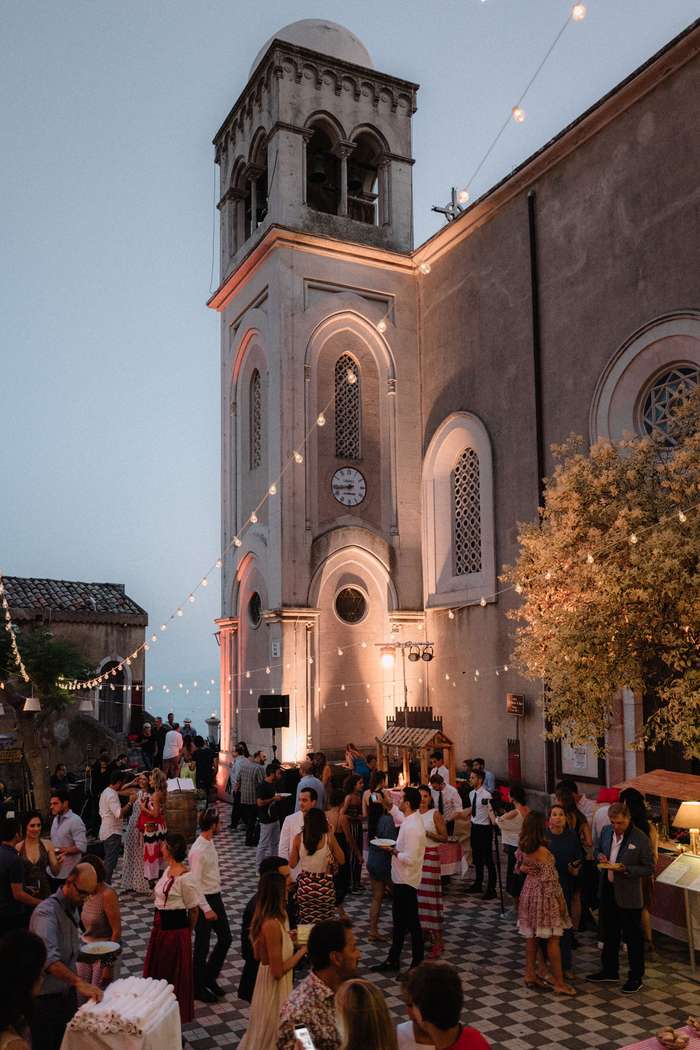
Castelmola Sicily during a wedding

Siracusa/ Ortigia Island

Siracusa and Ortigia Island are synonymous and you may hear their names interchangeably. Siracusa is towards the south end of the eastern shore of Sicily, about an hour drive from Catania. Ortigia island is part of the city of Siracusa, it’s an island but its separation is unnoticeable as it’s only divided from the city by a small stretch of water.

Siracusa is a gem and has been for centuries, it was the most powerful Greek city in Sicily and according to Cicero it was “the greatest Greek city and the most beautiful of them all”. Another fun fact about Siracusa is that it was the birthplace and home of Archimedes. He made his famous discovery about the density of metals in his bathtub in Siracusa and ran the streets naked screaming “Eureka”.

While you certainly won’t see naked scientists running around Siracusa anymore, you will be treated to a wonderful experience exploring this ancient city. For history lovers, the Siracusa Archeological Park offers amazing historical treasures like the ancient Greek Theatre, Roman Amphitheatre, Altar of Hieron.

For food lovers, shoppers and photography enthusiasts alike, Siracusa is a beautiful and romantic treat. After passing the bridge over to Ortigia island, you will arrive at the Temple of Apollo built in the 7th century BCE. To the right of the ruins of the temple, you will be greeted by the most delicious smells, ripe produce, fresh fish and the colors of the Siracusa market.

There will be hustle and bustle, sellers shouting about their products and you’ll feel the energy of the market exploding. Feast your eyes and stomach on Sicily’s abundant fruits and vegetables, and make sure to come here just before lunch-time for a special treat.

At the end of the market, there are a handful of food vendors with small bar-like shops and plenty of outdoor seating. They make delicious cheese & meat boards and fantastic sandwiches with the best Italian ingredients.

Our favorite place is Caseificio Borderi, a family-run salumeria that makes the most mouthwatering sandwiches literally stuffed to the brink with artisanal cheeses, meats and vegetables. This is an authentic and unforgettable Sicilian experience.

After the market, walk to the Fountain of Arethusa and admire the beautiful nymph in the center of the fountain. Then make your way to the center of Ortigia, the Piazza del Duomo. On the way, you can admire a mixture of Greek and Roman, Mediaeval Norman buildings and some baroque architecture.

Piazza del Duomo is a stunning square and perfect for taking some classic Sicilian photos, if you want a bird’s eye view of Ortigia, you can take the stairs to the top of the cathedral and admire the coast from up there.

If you wander around a little further, you will eventually arrive to the sea and can walk along to the tip of the island to Castello Maniace. Once you explored the city and have more time in the area for a beach day, definitely visit the beaches near Plemmirio. Absolutely stunning rugged coastline with turquoise beaches await you.

Ortigia Siracusa in Sicily

Noto

Venturing a little away from the coast, you will find the “city of sun”, Noto. Noto is a baroque jewel box, built entirely of limestone and its buildings positioned so they receive constant attention from the sun. As baroque would have it, the buildings are pompous, dramatic and full of detail.
Enhancing all the detail is the limestone that shines bright and emits an otherworldly golden glow when the sun hits its surface, creating a golden aura around the entire city, especially at sunset. Noto is the epitome of urban perfection.

The main artery of Noto is Corso Vittorio Emanuele and walking down this street you will find all the main attractions. Cattedrale di Noto is probably the most imposing and impressive of all buildings with its long cascading steps.

Across the street, you can visit Palazzo Ducezio and admire its baroque frescoes and interior details. Make sure to head out on its balconies so you can take some amazing photos of the cathedral and the street down below.

If you’re yearning for more baroque interiors you can visit all the churches and Palazzo Castelluccio and Palazzo Nicolaci are also open to the public and show the opulence of this period.

To relax and satisfy one’s sweet tooth, stop at the famous Caffé Sicilia. Local’s favorite since 1892 and made internationally known by Netflix’s Chefs Table, Caffe Sicilia serves a traditional menu of Sicilian desserts, made fresh with only local ingredients. There is absolutely no wrong choice here, order the entire menu, you deserve it!

There is no wonder why Noto is a UNESCO Heritage Site, it is a true expression of fantasy, devotion and humanity’s desire for beauty.

View of Noto in Sicily

Mt. Etna & Mt. Etna Wineries

Last but definitely not least on our must-visit list of East Coast Sicily is Mt. Etna. Mt. Etna’s majestic present has shaped much of Sicily, not only its landscape but our culture, our cuisine and our traditions as well. She’s a constant presence in our lives. Mt. Etna is Europe’s highest and most active volcano and your visit to Sicily is not complete without spending some time exploring her beauty.

Not everyone is an avid hiker, so we don’t recommend climbing to the top of Mt. Etna to everyone, but if you want a challenge you can take the 8hr round-trip trek and experience the marvel of being on top of an active volcano.
These treks are only allowed with a professional guide and proper shoes and gear. We are more than happy to help you book the hiking excursion if you’re the adventurous type.

If hiking is not your cup of tea, Mt. Etna should still not be skipped. To experience the lava covered terrain one can drive up to Rifugio Sapienza at 2000 meters over sea level and take a leisurely walk around the two nearby craters.

From here you can also take the cable-car to higher elevation where the cable-car company offers 4×4 bus tours that reach up to 2500 meters elevation. The surface of Mt. Etna is truly wonderful, covered in black lava rock and dotted with moss, tundra grass and other interesting flora; you will feel like walking on an alien planet.

If you are looking for a really exciting adventure then consider to book the mount Etna helicopter tour, a fantastic experience that lets you see it from above.

But the Mt. Etna adventure does not stop here. On the slopes of the volcano the soil is fertile and abundant in nutrients, hence making it a perfect place to grow wonderful produce and most importantly quality grapes. Mt. Etna has some of the best wineries in Sicily and due to its unique microclimate wine produced here is very special.

Most wineries offer wine tasting combined with antipasti or with a 3-4 course lunch made from local ingredients grown and produced in the area. A feast befitting the wine god Bacchus awaits you on the slopes of our beloved Mt. Etna.

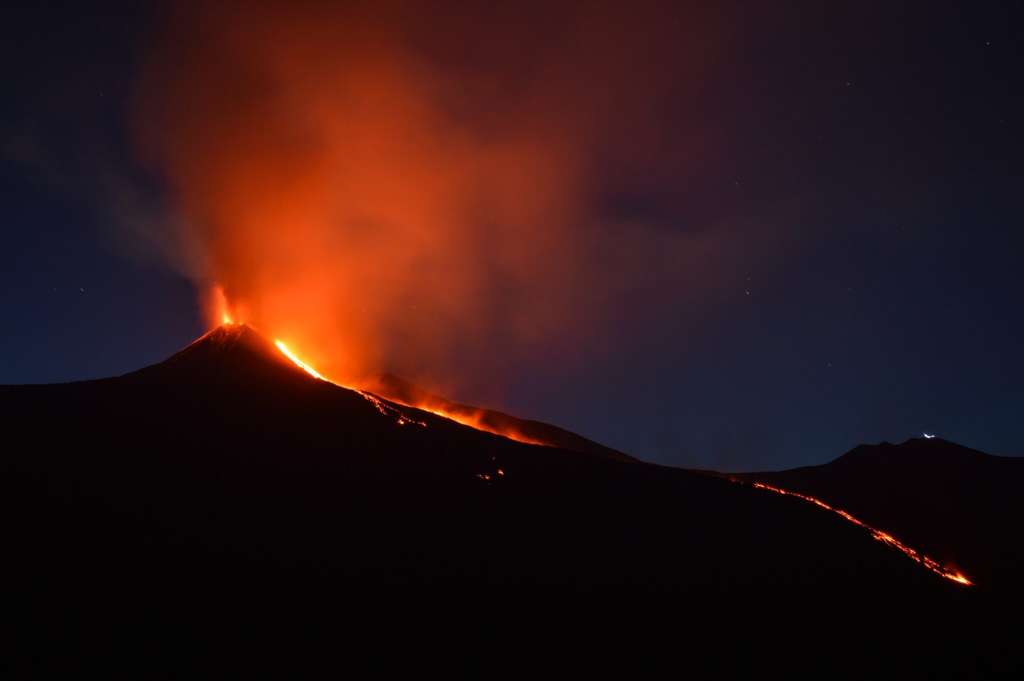
Mount Etna erupting

The East Coast of Sicily is a captivating and diverse region of Sicily and we could provide you with endless more inspiration for your visit. Taormina, Siracusa, Noto and Mt. Etna are just the beginning of the possibilities for a vacation that you will not forget.

Let us craft your Sicilian story and share the magic of Sicily with you on your next trip.
We’re specialized in finding the most enchanting accommodation for your stay, organizing authentic Sicilian experiences, covering your transportation needs and everything you may need so all you have to worry about is soaking the Sicilian Dolce Vita.
Contact us now and start planning your luxury Sicily Experience.

In Fiumefreddo, heading towards the sea, there is the splendid Castello Degli Schiavi. Castello Degli Schiavi is famous throughout the world because of its use as a movie set.
It achieved worldwide fame thanks to Francis Ford Coppola, who decided it was the perfect setting for the main scenes in The Godfather movies (parts 1 and 2).

Godfather movie lovers will remember the unforgettable scenes of the car explosion after the wedding and the discussion with Don Tommaso about the Italian politicians. Both of these scenes took place in the grand Castello Degli Schiavi (if you want to find out more venues featured in the movie check this article published on Forbes).

Thanks to the splendor of this venue, it is one of the most highly requested for private events and couples that want to celebrate their wedding in one of the most iconic Godfather venues. Of course, we can organise a private visit too, get in touch with us and discuss it with our travel advisor.

Find out what makes Castello degli Schiavi such a special location, and how you can visit or even hire it as a venue for an unforgettable private event in Sicily.


Where is the Castello degli Schiavi?

The castle is located approximately 30 minutes drive from Taormina, towards Catania in the commune of Fiumefreddo di Sicilia.

The villa and courtyard are located in a countryside setting but also within close proximity to the sea. Whether you are looking for a private visit to the castle, or to use it as the location for an exclusive event, we can arrange a luxury transfer from your place of stay, as well as transport for your guests.

The legend of Castello degli Schiavi

According to the legendary tale, Castello degli schiavi was built in the 1700’s by a doctor from Palermo, named Gaetano Palmieri.

The doctor had been given the land by the King, as apparently he had cured the King’s son of a deadly disease and the King wanted to express his thanks. Shortly after the build was complete, there was an attempted raid by Turkish pirates. As the story goes, the castle owners had been captured and the Turks were headed back out to sea.

Apparently, the raiders were stopped on their way out of Sicily by a group of locals, and the castle owners were freed. At the property, there is a loggia where two statues of pirates were placed.

They appear to represent the Turks who failed to capture the castle’s owners and appear to be staring out to sea longing for their own escape.

It is apparently for this reason that the castle has kept its name which translates to ‘Castle of the Slaves’.

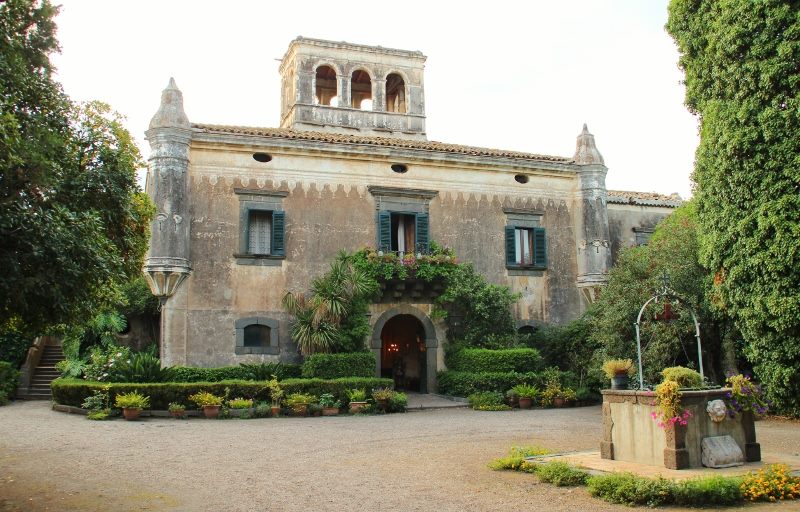
Castello degli Schiavi in Sicily
Andrej Antipin, CC BY-SA 4.0, via Wikimedia Commons

How to visit Castello degli Schiavi

Castello degli Schiavi is a must-visit location for fans of the Godfather movies. The castle is now privately owned by a family but is still available for private tours, and it is one of the highly requested experiences by our clients.

You will have the chance to admire the grand exterior built in typical Sicilian baroque style, to wander the courtyard and to transport yourself to the mind of Godfather director Francis Coppola, and see what he saw when he decided this would be one of the perfect places to represent Sicily on screen.

You will be greeted by the owner who will guide you around the property, pointing out the famous rooms and memorabilia that were captured on film.

For example, you can see where the famous scenes took place such as where Michael dies peacefully alone in his chair, and where his new wife Apollonia was murdered.

The castle is just one of a series of nearby spots that were selected by Francis Coppola as suitable locations for his artistic representation of traditional Sicily.

For a true experience of the Godfather locations, why not take our exclusive Godfather tour including other iconic locations such as the villages of Savoca and Forza d’Agrò.

Castello degli Schiavi as venue for private events and weddings in Sicily

Castello degli Schiavi also serves as a stunning location for exclusive events and ceremonies. For an occasion to remember, it can be hired for events such as weddings, gala dinners, or anything in between.

The building holds up to 150-200 people for an indoor or outdoor event, and with the help of our team, the theme can be customized to make pretty much any vision a reality.

If you are a real Godfather fan, maybe you are looking for a godfather movie-themed event or wedding, with memorabilia and fun props for photos.

But Castello degli Schiavi is a grand location for any special private event, and our events team has many local contacts who can set the stage and bring your event to life.

wedding dinner at Castello degli Schiavi
Photo credit: Giuseppe Marano photographer

Maybe you will opt for an all-out Sicilian-themed event, in which case we can create a Sicilian extravaganza with traditional features such as light displays, folklore musicians, Sicilian cart, and traditional themed table displays.

Our team can help arrange a visit to the impressive Castello degli Schiavi so that you can experience this historic venue that is filled with Sicilian character.

Otherwise, allow us to help craft your unique event with Castello degli Schiavi as the perfect Sicilian setting.

You’ll find Palermo on the northwest coast of Sicily and as a World Heritage site it a series of religious and civil structures, some dating all the way back to the Kingdom of the Normans. This time was characterized by an exceptional convergence between cultures that coexisted on Sicily, that is, western, Islamic, and Byzantine, which gave rise to new concepts of space and decoration in art and architecture.  The cultural exchange generated a combination of unique elements derived from the different techniques used.

A new and extraordinary synthesis of styles fused by Byzantine, Muslim, and Roman elements, all contributing to the development of the Mediterranean culture.

The site is listed last in chronological order on the World Heritage list for 2015, and is an unbeatable example of the political and cultural conditions that were taking place in Sicily during that time period, all characterized by a profitable cohabitation of diverse populations with different religions, that favored the exchange of human values ​​and the flowering of lively cultural fusion.

If you are planning a trip in Sicily read also our post: Top 10 things to do and see in Palermo and Top 10 luxury tours in Sicily.

The archipelago of the Aeolians is composed of 7 islands: Lipari, Vulcano, Salina, Stromboli, Filicudi, Alicudi, and Panarea.  They are found on the Northeast side of Sicily and represent an extraordinary testimony to the birth and evolution of the volcanic islands.  Notwithstanding the ongoing volcanic activity, or maybe thanks to it, the Aeolian Islands are a fascinating and rich natural environment full of flora, fauna, stunning beaches, coves, caves, inlets, cliffs, and a varied and abundant ocean floor.  The islands are a favorite destination for Sicilians during the summer months, where they can take in the breathtaking views, crystal clear water, and experience first hand the volcanic eruptions.  Stromboli is the only island on the archipelago with a constantly active volcano, and she offers an amazing show that is extremely intriguing at night when the rivers of fire ooze down to the sea.  The Aeolians get their name from the mythological Greek god of wind, Aeolus, and were added to the UNESCO list in 2000.


Also known as the Valley of Temples, located along the coast of the meridional side of the island, this was the first site to be added to the list in 1997.  Agrigento was founded in the VI century BC and was one of the most prosperous cities in the belly of the Mediterranean.  There still stand the magnificent temples as testimony to the splendor of the ancient city.  What makes this archaeological site so historically valuable is how easily it takes you through the ages.  As soon as you enter you find yourself immersed in a true Greek metropolis where even the air you breathe tells a story.  All of this is surrounded by typical Sicilian gardens full of citrus trees and blossoming almonds, which is why springtime is the ideal time to visit.  A nighttime tour of the temples is a mystical experience worth trying, and is available only from July 15th through September 17th.

Il Gattopardo by Tomasi di Lampedusa is considered a historical novel in that it narrates the event of Garibaldi landing in Sicily that later lead to the annexation of the island to the Piedmontese kingdom of Savoy.

Through interior events, political intrigue, and purely island concerns and issues, the reading faithfully depicts the various details and motivations of the socio-historic situation on Sicily at the time.

Tomasi wrote “For over twenty-five centuries we’ve been bearing the weight of superb and heterogeneous civilizations, all from outside, none made by ourselves, none that we could call our own…,and yet we have been a colony for two thousand five hundred years”.

This is to testify the fact that Sicily has always been a land of conquest, and even in the case of the Piemontesi, although armed with good intentions, they are merely the umpteenth foreigner to propose themselves governor of the island.

Tomasi also describes how the island itself, geographically speaking, has grown in its own image and likeness the Sicilian people, emphasizing how, “Sicily, the climate, the Sicilian landscape.

These are the forces which have—and perhaps more than foreign rule and defilements – built our spirit: […] this land, in which the hell around Randazzo and the beauty of the bay of Taormina are separated by only a few miles; this climate that inflicts six months of fever upon us […] and still after storming rains, which drive the dry streams crazy, drowning beasts and men right there where two weeks before they both collapsed with thirst.  This violence of the landscape has formed our character […]”.